

About the Author
Ron D. Williams writes novels about ordinary people doing work that matters.
Some of that work is a job. A good deal of it is not: a marriage, a friendship kept up for fifty years, an attention paid to somebody nobody else is paying attention to. His characters are plant managers and reporters, retired engineers and small-business owners, four old friends who have kept the same booth for decades, and the person at the edge of a room whom nobody else has thought to notice. They rarely save the world. More often they ask a question, keep a record, sit with somebody, or do a necessary job well when no one is watching.
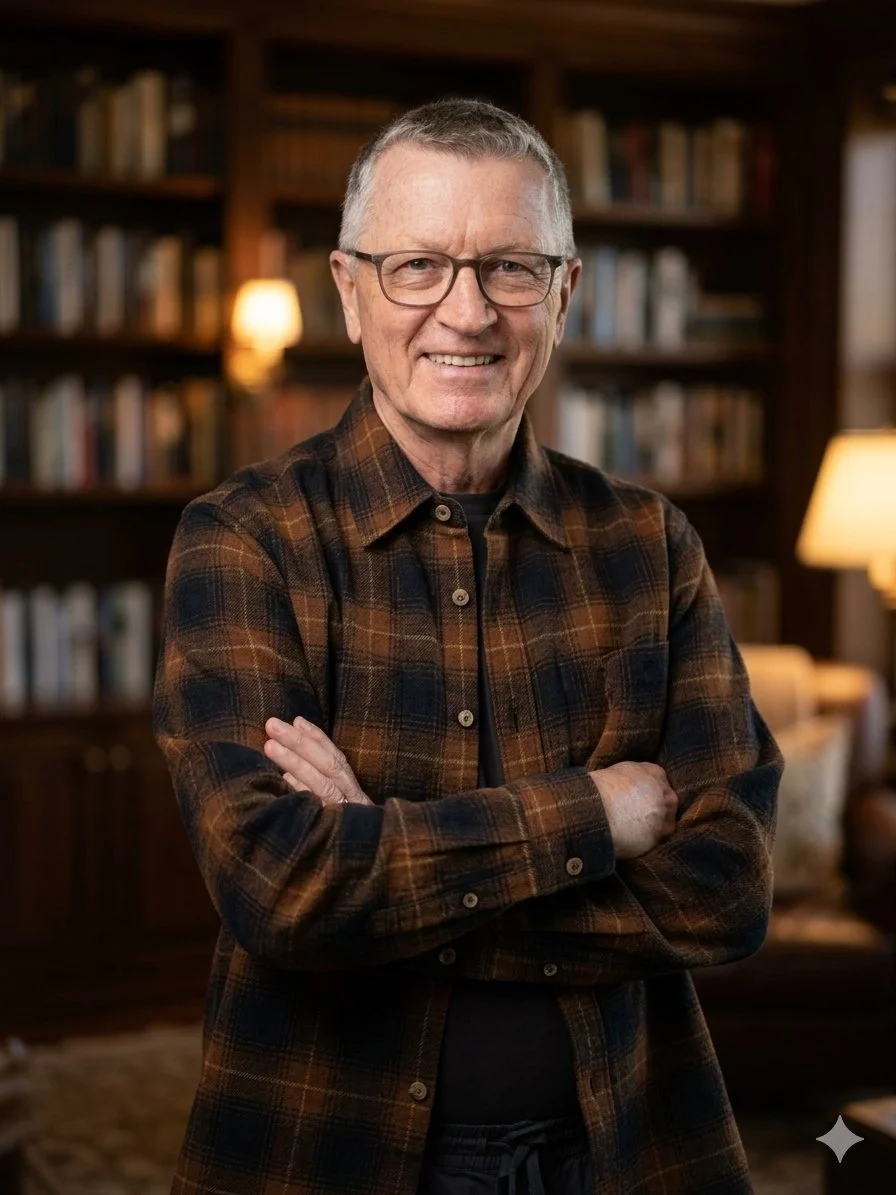
Ron spent six years in the U.S. Navy’s nuclear submarine force. He came out of it onto a power plant construction crew, doing whatever gets handed to the newest hire there. He finished as the president of a research and consulting company, by way of a career in the electric utility industry that ran from managing power plants to leading large enterprise initiatives. Along the way he became interested not only in machines and organizations but in the people inside them: how they make decisions, how cultures form, how responsibility gets lost, and how much of what keeps an institution functioning depends on work that receives little attention or credit.
For most of his working life his writing was technical reports, financial business cases, and expert testimony for regulatory proceedings, a discipline close to the opposite of a novel. He began writing fiction in his early seventies, and had to learn it the way he had learned the rest, badly at first and then less badly.
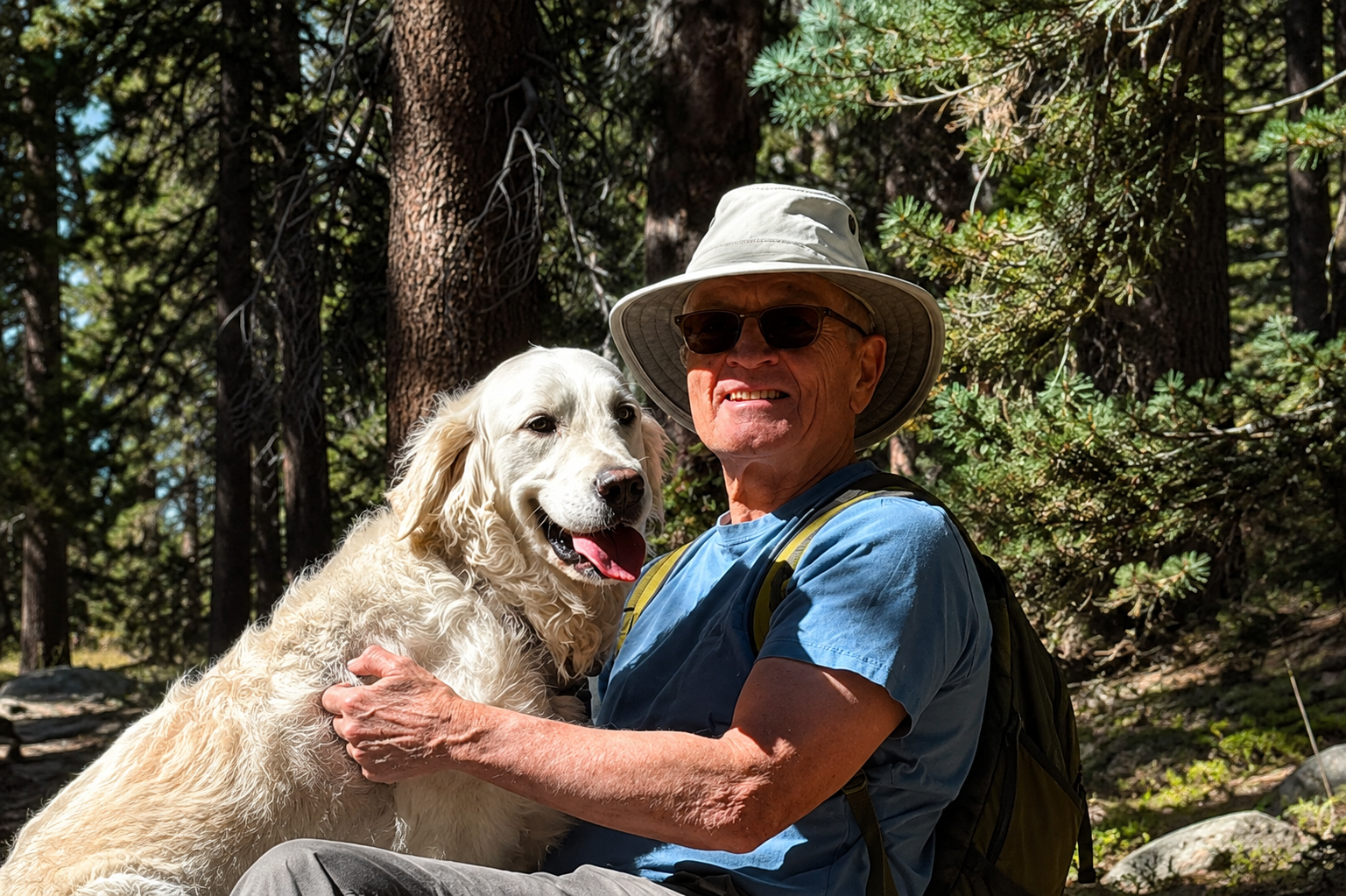
He lives in the Sierra Nevada with his wife, Barbara, and their dog, Charlie.

Landscape is never far from the work. Mountains, desert, rivers, weather, fire and water are more than settings. They are reminders that the world is older and larger than the people moving through it, and that much of a worthwhile life consists of paying close attention to the small part of it temporarily placed in our care.

Ron took up long-course triathlon in his early sixties, sedentary and starting from nothing. Fifteen years later he has qualified three times for the Ironman World Championship and completed Escape from Alcatraz at seventy-five.
His stories are about the ordinary kind of persistence, the kind available to anyone: continuing after the novelty is gone and before the result is in, on the days when nothing about it feels like progress. It is what he has relied on. It is also what he gives his characters. They are not gifted people. They are stubborn in a quiet way, and they are still asking after everyone else has stopped.
Editor and Chief Morale Officer
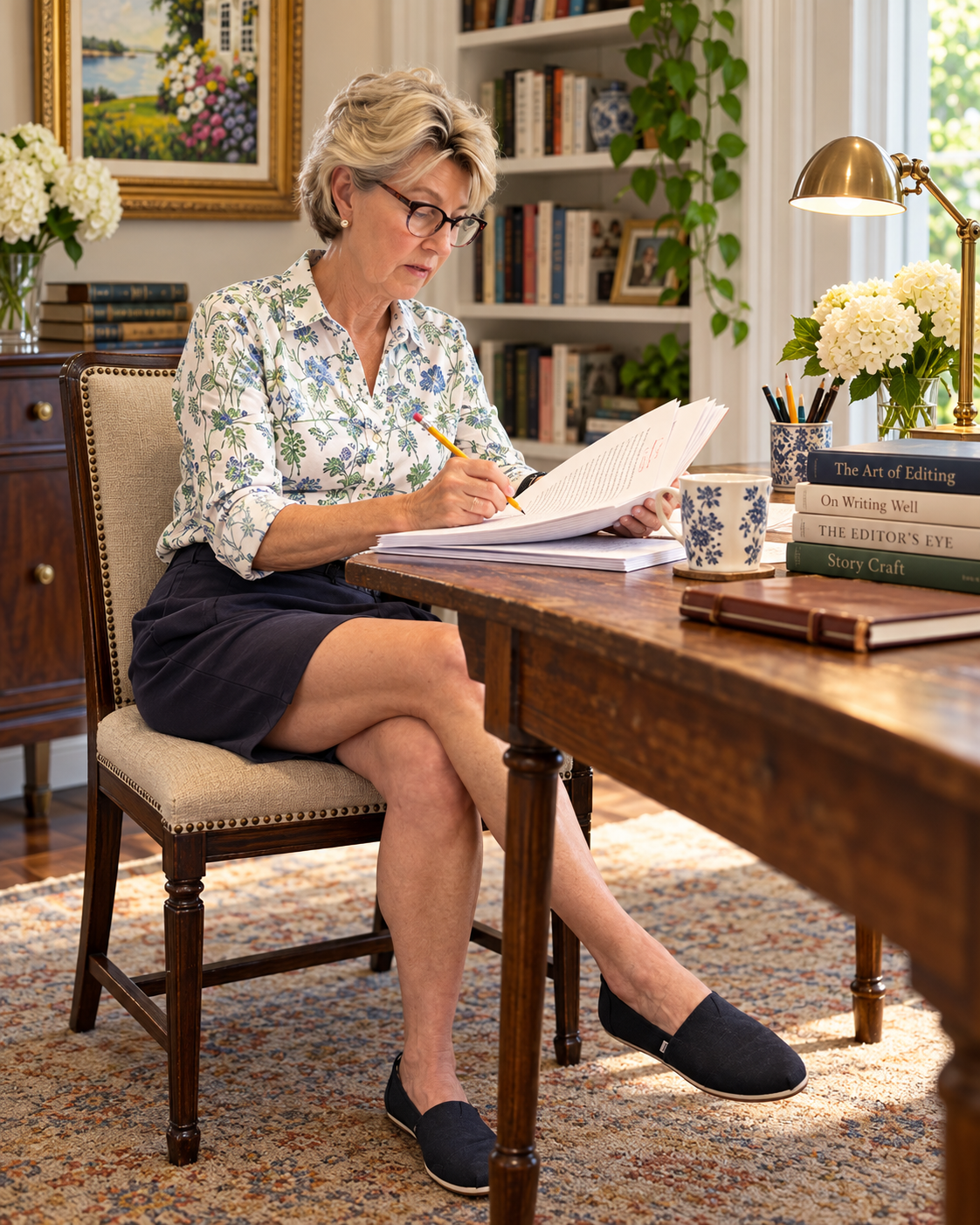
Barbara Williams is the editor and Chief Morale Officer of Notice Books, LLC, a title that reflects both the seriousness of her editorial judgment and the considerable amount of patience required to exercise it.
After undergraduate and graduate degrees from Skidmore and then Cornell, Barbara spent her career as an executive in banking, utilities and global consulting firms. Over more than three decades, she wrote and reviewed business proposals, negotiated contracts, and oversaw corporate governance functions where words mattered, details mattered, and vague thinking had a way of becoming expensive. Those years made her a natural editor: attentive to structure, intolerant of unnecessary words, and entirely willing to put a pencil through a sentence its author had considered perfectly good.
Her work with Notice Books goes beyond copyediting. She is the first serious reader, the person most likely to notice when a character would not actually say something, when a paragraph is trying too hard, or when a manuscript has wandered away from the story it meant to tell.
Away from the page, Barbara is usually moving. She hikes the Sierra with Charlie, the family’s very enthusiastic girl dog, or rides her road bike up mountain grades that most sensible people would prefer to admire from the car.
Why I Write.
“Years ago, I began writing nonfiction to pass along what a career managing and consulting in large organizations had taught me. I wrote books on subjects such as Epistemic Resilience in Corporate Governance, The Outsourced Congress, Cultural Reversion to the Mean, and The Role of Drift in Failure Analysis. More than ten books altogether, thoroughly researched and written with textbook accuracy.
And they were boring.
So I turned to fiction.
I discovered that the lessons buried in those textbooks could come alive through ordinary people confronting ordinary problems. Characters could reveal through conversation, choices, mistakes, and occasional good judgment what I had once needed entire chapters to explain. The jargon disappeared. The lessons became subtext. And, to my considerable relief, the stories became enjoyable to read.
I write because I enjoy telling stories. That's it. I like creating characters, spending time with them, and discovering what happens when ordinary people encounter circumstances they weren't expecting.

How I Write.
We live at a remarkable time for people who have stories to tell. You can write a book in Word or Pages, design a cover in Canva, and use a collection of astonishingly capable tools to help you research, think, organize, draft, and edit. Then you can format it in Vellum for ebooks or paperbacks and upload it to Kindle or Apple or any number of on-line book stores. Simple.
The important thing is to tell your story.
There are people everywhere who have wonderful stories in their heads. They have characters they've imagined, experiences they want to share, and things they've noticed about life that the rest of us might enjoy discovering.
You are one of those people. Write your stories. You are interesting and we are interested.
Do a little every day. Write a sentence about a character. Then a paragraph. What do they like? How do they talk? Where to they live? What matters to them? Who are their friends? Then a page. Then two. Just keep going. Enjoy the process. No one is judging you. Just write.
I wish you many happy days and thanks for visiting.
––Ron D. Williams